You are halfway through the workday when that familiar pressure starts creeping in. Your shoulders tighten, your neck feels stiff, and before long, you have a headache that makes concentrating difficult.
Sound familiar?
Headaches are extremely common, but not every headache starts with the same cause. In some cases, discomfort in the neck, muscles, or joints may contribute to headache symptoms. When headaches regularly appear alongside neck stiffness or tension, it may be worth looking beyond temporary pain relief and considering whether the neck itself is part of the problem.
For certain types of headaches associated with neck pain, chiropractic care may be one part of a conservative treatment approach.
What Does Your Neck Have to Do With a Headache?
The muscles, joints, and nerves of the neck work together to support and move your head throughout the day. Hours spent looking at a computer, driving, using a phone, or working in one position can leave the neck and surrounding muscles feeling stiff or uncomfortable.
For some people, headaches occur at the same time as this neck discomfort.
One particular type, called a cervicogenic headache, originates from structures in the neck even though the pain is felt in the head. Neck pain and reduced neck movement can also occur in people experiencing tension-type headaches. Current clinical guidance recognizes an important relationship between neck dysfunction and certain headache presentations.
That does not mean every headache is caused by your neck. Migraines, tension-type headaches, medication-related headaches, illness, and other medical conditions can produce headaches as well. Determining what type of headache you are experiencing is an important first step.
Signs Your Headache May Be Connected to Neck Tension
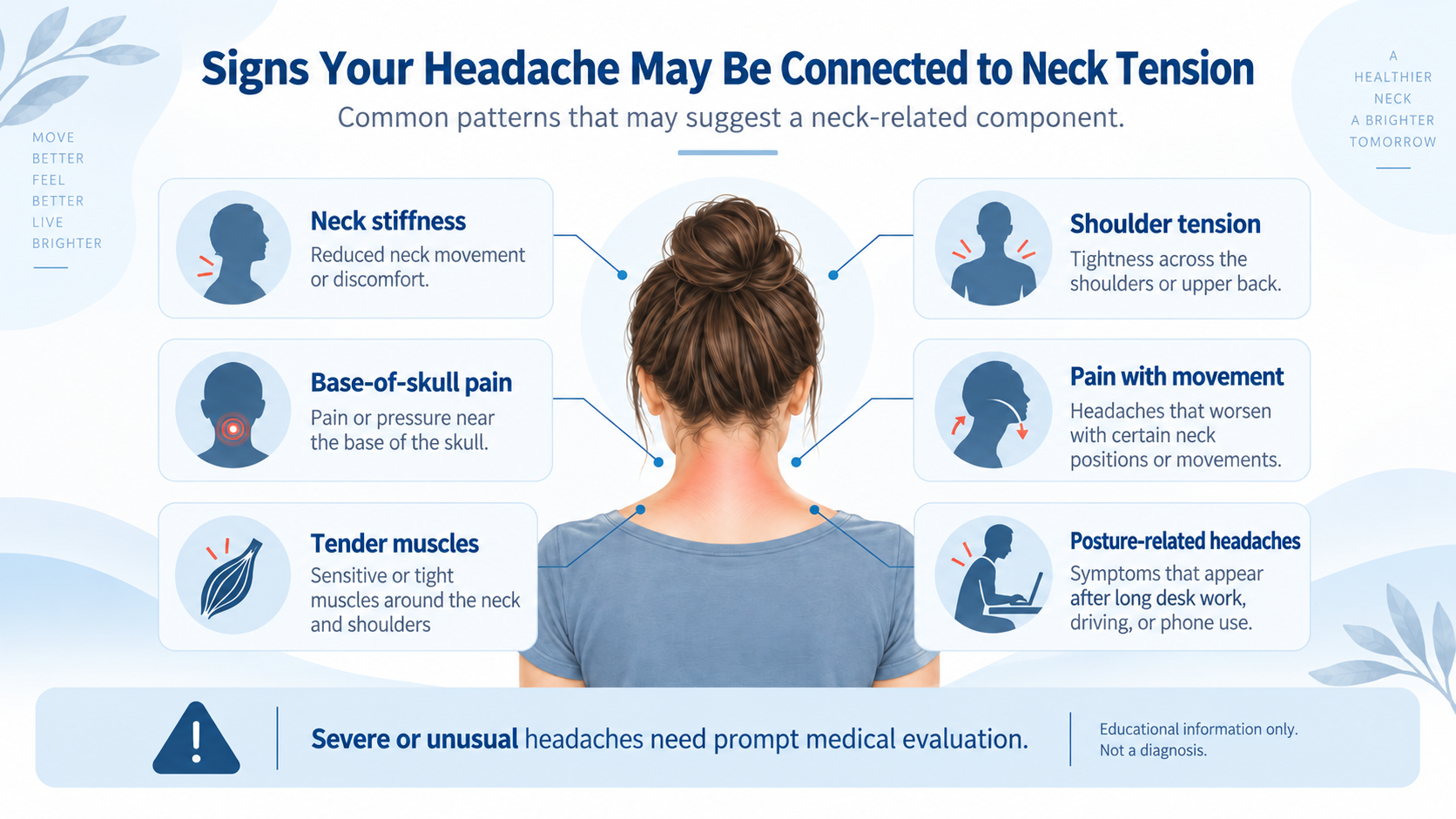
A headache with a musculoskeletal component may sometimes be accompanied by symptoms such as:
- Neck stiffness or restricted movement
- Tightness across the shoulders or upper back
- Pain near the base of the skull
- Headaches that seem to worsen with certain neck positions or movements
- Tender or tense muscles around the neck and shoulders
- Headaches that appear after prolonged desk work, driving, or other sustained postures
The pattern matters. A chiropractor should review where the pain occurs, how often it happens, what seems to trigger it, whether neck movement affects it, and whether other symptoms are present before recommending treatment.
How Chiropractic Care May Help
Chiropractic treatment for headaches associated with neck problems is not simply about “cracking the neck.”
Depending on the examination findings and the patient’s needs, care may involve a combination of approaches.
Improving Joint Movement
Restricted or uncomfortable movement in the cervical or upper thoracic spine may contribute to neck symptoms. Chiropractors may use spinal manipulation or gentler joint-mobilization techniques to address appropriate areas of restricted movement.
A 2026 clinical practice guideline supports spinal manipulation as an option for cervicogenic headache. For tension-type headaches, the guideline recommends using manipulation as part of a broader, multimodal approach rather than relying on it alone.
Addressing Muscle Tension
Tight muscles around the neck, shoulders, and upper back can make an already uncomfortable day even more difficult.
Depending on the patient’s condition, treatment may include soft-tissue techniques intended to address muscle tension and improve comfortable movement. Current guidelines also support soft-tissue treatment and joint mobilization as possible components of care for certain headache presentations.
Exercise and Posture
Treatment should not necessarily stop when you leave the chiropractic office.
Specific stretching, strengthening, endurance, and postural exercises may help improve how the neck and upper body function during everyday activities. Research-based guidelines for persistent headaches associated with neck pain include exercise and multimodal care among the treatment options clinicians may consider.
Your chiropractor may also discuss work positioning, computer setup, sleep habits, movement breaks, or other daily factors that could be contributing to repeated neck tension.
What About Tension Headaches?
The name can be confusing. A “tension-type headache” does not necessarily mean tight neck muscles are the sole cause.
In fact, the exact cause of tension-type headaches is not fully understood. Mayo Clinic notes that the older theory that they are simply caused by contractions of the face, neck, and scalp muscles is no longer considered a complete explanation.
However, neck pain and muscular tenderness can occur alongside tension-type headaches.
For this reason, when neck discomfort is part of the overall picture, treatment may include several strategies rather than one isolated therapy. Current chiropractic guidance favors a multimodal approach that can include mobilization, soft-tissue techniques, exercise, education, and, when appropriate, manipulation.
Can Chiropractic Care Help With Every Headache?
No.
Headaches have many possible causes, and chiropractic care is not appropriate for every headache or every patient.
The National Center for Complementary and Integrative Health notes that manual and exercise therapies may help reduce pain, frequency, or disability in some people with cervicogenic headaches, while also noting limitations in the quality of some available research.
That is why the goal should not be to assume that every headache needs an adjustment. The goal is to evaluate the symptoms, identify whether there appears to be a musculoskeletal component, and determine what type of care or referral is appropriate.
When a Headache Needs Medical Attention
Some headaches should be medically evaluated rather than treated as routine neck tension.
Seek emergency medical care for a sudden, severe headache, particularly if it is accompanied by symptoms such as:
- Fever and a stiff neck
- Confusion
- Seizures
- Double vision or significant vision changes
- Weakness or numbness
- Difficulty speaking
- A recent head injury, especially if the headache is worsening
A headache that suddenly feels very different from your usual headaches also deserves medical attention.
Safety comes first. A proper chiropractic evaluation should include screening for symptoms or circumstances that may require medical referral before treatment begins.
Stop Treating Every Headache Like It Is the Same
Reaching for temporary relief every time a headache appears may not tell you why the problem keeps returning.
If your headaches frequently occur alongside neck stiffness, limited movement, or shoulder tension, an evaluation may help determine whether your neck is contributing to the symptoms.
At Town and Country Chiropractors in Columbus, Ohio, our chiropractors can evaluate your neck movement, symptoms, and overall condition and discuss whether chiropractic care is appropriate for you.
The objective is simple: understand what may be contributing to your discomfort and develop a treatment approach that fits your individual needs.