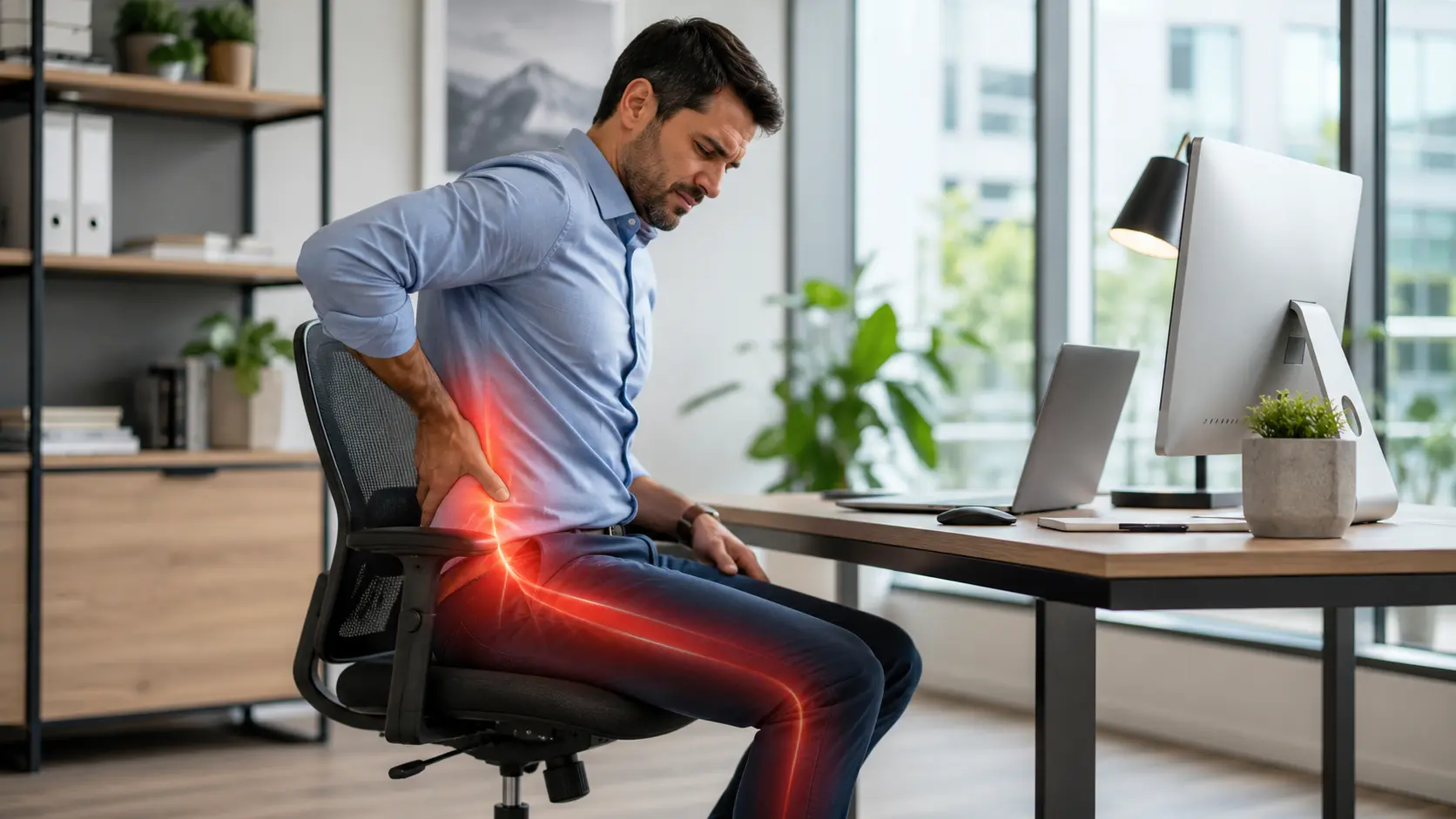
A typical workday may involve sitting during the morning commute, spending several hours at a desk, eating lunch in front of a screen, driving home, and then relaxing on the couch. Even people who exercise regularly can spend much of the remaining day in a seated position.
At first, sitting may feel harmless. Over time, however, you may notice stiffness when standing up, aching across your lower back, tightness in your hips, or discomfort traveling into your buttock or leg.
Sitting is not automatically harmful, and there is no single “perfect” posture that prevents every problem. The bigger concern is remaining in one position for too long, especially when your chair, desk, or computer setup encourages awkward positioning. Research indicates that prolonged sitting can increase immediate reports of lower-back discomfort, although sitting alone does not explain every episode of clinical back pain.
Understanding how sitting affects the back, hips, and legs can help you recognize problems earlier and make practical changes before occasional discomfort becomes a persistent limitation.
Why Can Sitting All Day Cause Pain?
Your body is designed to move between different positions. Walking, reaching, bending, standing, and changing posture allow different muscles and joints to share the workload.
When you remain seated for hours, the same tissues must support you continuously. Even a reasonably neutral position can contribute to muscle fatigue when it is maintained for too long. The National Institute for Occupational Safety and Health notes that extended static positioning may increase muscle fatigue and interfere with normal blood flow.
The problem is often a combination of factors:
Long periods without movement
Limited back or lumbar support
A chair that is too high or too low
Leaning toward a laptop or monitor
Reaching forward for the keyboard or mouse
Sitting with your weight shifted to one side
Keeping a wallet or phone in a back pocket
Poor hip, core, or lower-body conditioning
An existing joint, disc, or nerve problem aggravated by sitting
Pain may therefore come from the position itself, the length of time you maintain it, your workstation arrangement, or an underlying condition that becomes more noticeable while seated.
How Does Prolonged Sitting Affect the Lower Back?
Sitting places the pelvis and lower spine in a relatively fixed position. When the chair does not support your lower back, it is easy to gradually round your spine, move your head forward, and collapse through your midsection.
This posture may increase fatigue in the muscles supporting the spine. It can also make joints and other tissues feel stiff when you eventually stand, twist, or bend.
Common signs that sitting may be aggravating your lower back include:
A dull ache after working at a desk
Stiffness when getting out of a chair
Pain that improves after walking
Difficulty standing fully upright at first
Discomfort that becomes worse later in the workday
Repeatedly shifting position to find relief
Your chair can make a significant difference. OSHA recommends supporting the back, keeping the hips and thighs supported, and positioning the knees at approximately hip height. OSHA also emphasizes that no single workstation arrangement or posture is ideal for everyone.
In other words, good ergonomics help, but even an expensive ergonomic chair cannot replace regular movement.
Why Do Your Hips Become Tight or Painful While Sitting?
Your hips remain flexed while you sit, meaning the angle between your torso and thighs stays closed. Maintaining this position for hours may contribute to stiffness around the front of the hips and reduce comfort when extending the leg behind you during walking.
One study found an association between prolonged sitting, physical inactivity, and reduced passive hip extension. The researchers noted that changes in muscle stiffness may be one possible factor, although more research is needed to determine exactly how these changes contribute to pain.
At the same time, the muscles around your hips and buttocks are doing relatively little compared with when you walk, climb stairs, or stand up. This does not mean your gluteal muscles permanently “switch off,” but they may become less conditioned if your overall routine contains very little movement.
Hip-related symptoms may include:
Tightness across the front of the hip
Aching in the buttock or outside of the hip
Discomfort when standing after a long meeting
Reduced stride length when you first begin walking
Pain while climbing stairs
A feeling that one hip is tighter than the other
Not all pain felt near the hip comes from the hip joint. Discomfort from the lower back, pelvic joints, muscles, or nerves can also be felt around the buttock and hip region. A proper examination can help identify where the symptoms are most likely originating.
How Can Sitting Trigger Leg Pain?
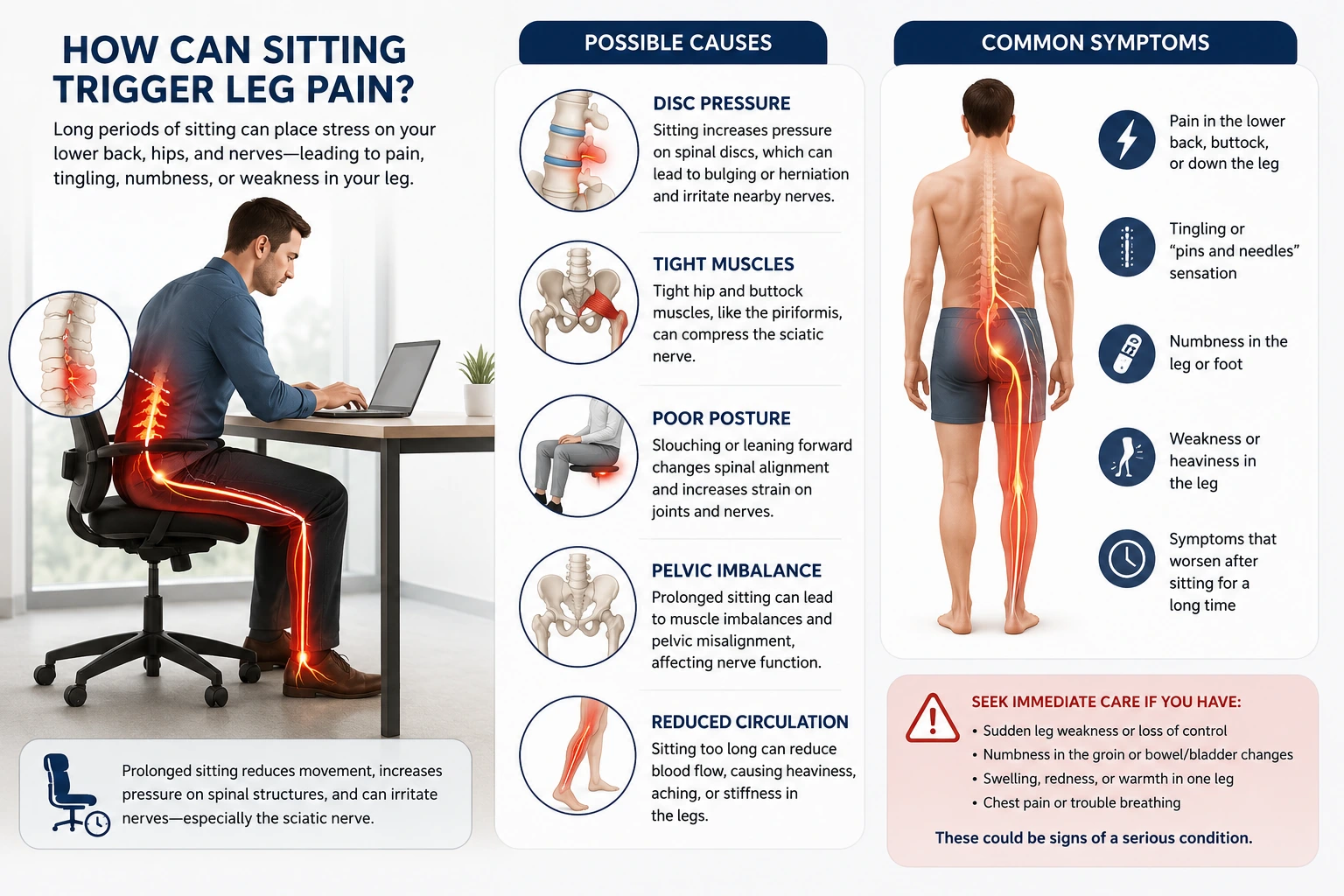
Leg pain after prolonged sitting can have several possible explanations.
Muscle fatigue and limited movement may produce aching, heaviness, or stiffness. Tightness around the hips and buttocks can also change how you move once you stand.
In other cases, pain may be referred from the lower back or involve irritation of a nerve. Sciatica, for example, describes pain associated with irritation or compression of the sciatic nerve or its nerve roots. Symptoms may begin in the lower back or buttock and travel down the leg, sometimes with tingling, numbness, or weakness.
However, not every pain traveling into the leg is sciatica. Similar symptoms can arise from muscles, joints, circulation problems, or other medical conditions. This is why self-diagnosing every episode of leg pain as a “pinched nerve” can send treatment in the wrong direction.
You should also avoid assuming that sudden calf pain is simply caused by sitting. Unexplained swelling, warmth, redness, or tenderness in one leg can be associated with a blood clot and should receive prompt medical attention. Difficulty breathing, chest pain, coughing up blood, lightheadedness, or fainting requires emergency care.
Is Poor Posture the Main Problem?
Posture matters, but it is only part of the picture.
People sometimes become anxious about maintaining an ideal upright position throughout the entire day. In reality, holding any position rigidly for hours can become uncomfortable. The most useful posture is often your next posture.
Instead of trying to remain perfectly still, aim for supported variety:
Sit upright for a while.
Lean back with your lower back supported.
Stand for a short task.
Walk during a phone call.
Change the position of your feet.
Move between different working locations when practical.
A standing desk can help create variety, but standing all day is not the solution. Prolonged standing can also contribute to lower-back and lower-limb discomfort. The goal is to alternate positions rather than replacing one static posture with another.
What Can You Do During the Workday?
Small changes performed consistently are usually more practical than waiting until the end of the day for one long stretching session.
Take Short Movement Breaks
Stand, walk, or change tasks regularly. NIOSH reports that short hourly breaks can reduce discomfort among computer users and recommends periodic rest breaks and changes in posture.
A five-minute movement break might include walking to refill your water, taking a brief lap around the office, climbing a flight of stairs, or completing a few comfortable stretches.
Improve Your Workstation
Adjust your chair so your feet rest on the floor or a footrest. Support your lower back, keep frequently used equipment within easy reach, and position the monitor so you can look forward rather than continually bending your neck or upper body.
When using a laptop for extended periods, consider a separate keyboard and mouse so the screen and input devices can be positioned more appropriately.
Move Without Waiting for Pain
Do not wait until your back is already aching before standing. Link movement to something you already do, such as completing a meeting, sending a report, finishing a call, or refilling your drink.
Build Strength Outside the Workday
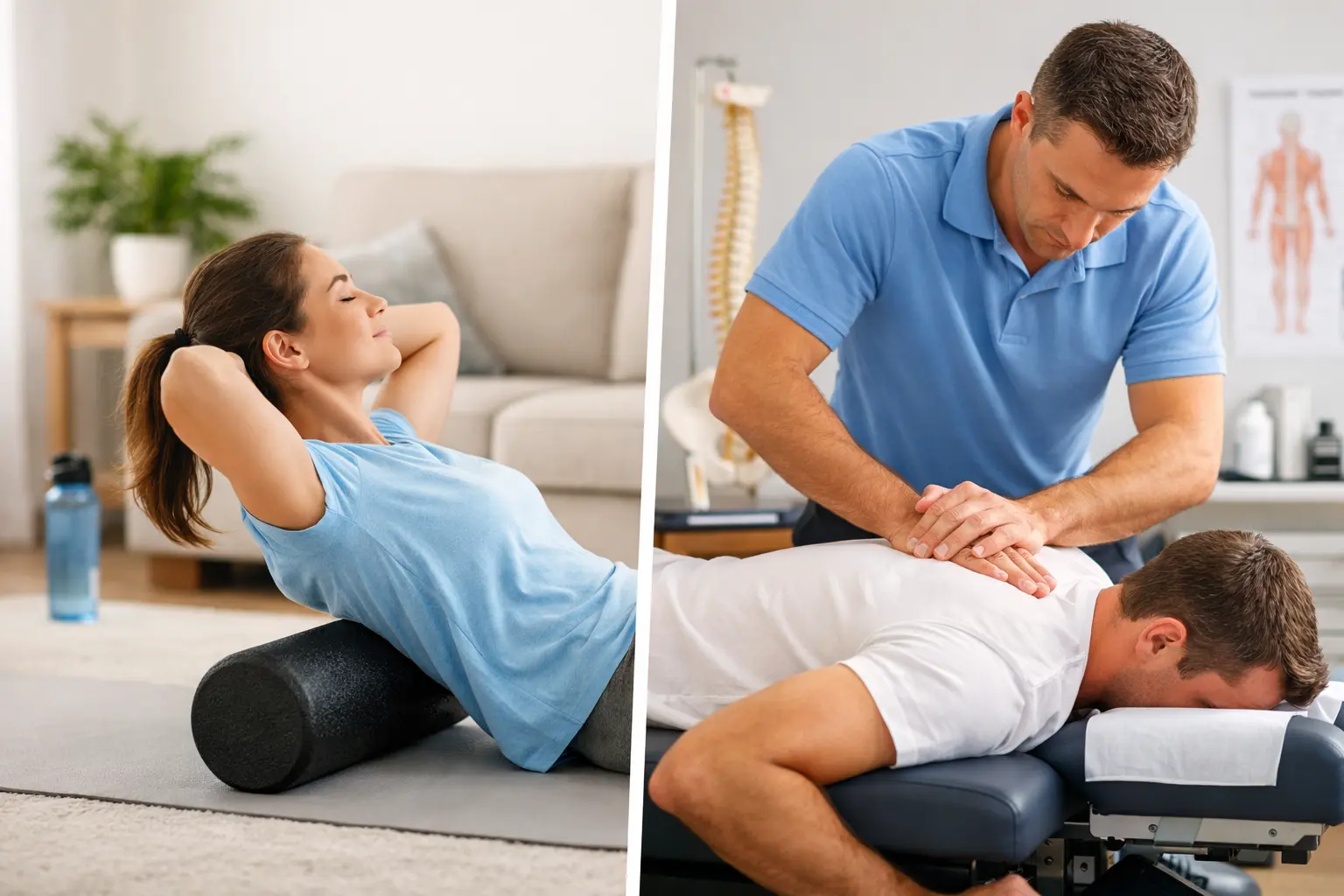
Walking and exercises targeting the hips, legs, abdominal muscles, and back may improve your ability to tolerate daily activities. The correct exercises depend on your condition, current fitness level, and symptoms.
General movements sometimes used in a mobility or conditioning routine include:
Exercise should not produce increasing numbness, weakness, sharp pain, or progressively worsening symptoms. An individualized evaluation is more appropriate when pain is persistent or repeatedly returns.
When Should You Have the Pain Evaluated?
Consider scheduling an evaluation when your pain:
Continues despite changing your routine
Repeatedly returns during the workweek
Interferes with sleep, walking, or exercise
Travels below the knee
Includes ongoing tingling or numbness
Causes you to avoid normal activities
Is becoming progressively worse
Seek urgent medical care when back pain follows significant trauma, occurs with fever, produces new bowel or bladder control problems, or causes substantial or progressive leg weakness. Numbness around the inner thighs, genitals, or area that would contact a saddle also requires emergency assessment.
How Can a Chiropractor Help With Sitting-Related Pain?
A chiropractor can evaluate how your spine, pelvis, hips, muscles, and nerves are functioning together. The examination may include reviewing when the pain occurs, testing movement, checking strength and sensation, examining posture, and determining whether symptoms appear to be mechanical or require referral to another healthcare professional.
Depending on the findings, a conservative care plan may include manual treatment, mobility work, therapeutic exercises, activity recommendations, and guidance for adjusting your workstation.
The objective should not be to provide the same treatment to every person who sits at a desk. Someone with simple muscle fatigue may need a different plan than someone experiencing joint restriction, recurring lower-back pain, or symptoms traveling into the leg.
Do Not Let Your Chair Control the Rest of Your Day
Sitting is a normal part of modern life. The problem develops when sitting becomes your dominant position and your body receives too little movement to balance it.
Changing positions regularly, improving your workstation, walking more often, and building strength can reduce the strain associated with a desk-based routine. When discomfort persists, an evaluation can help determine whether your symptoms are coming from the lower back, hips, muscles, nerves, or another condition.
If back, hip, or leg pain is making it difficult to work, exercise, drive, or enjoy your normal routine, contact Columbus Chiropractors to schedule an evaluation. Addressing the problem early may help you understand what is aggravating your symptoms and develop a practical plan for moving more comfortably.